
Travel story 11 min read
MyTravelBuddy Stories
Have You Ever Wondered What It Would Take to Visit the Seven Wonders of the World?
A romantic, practical Maya Roam journey through the New Seven Wonders of the World, with maps, memory-rich images, and the first shape of a bucket-list route.
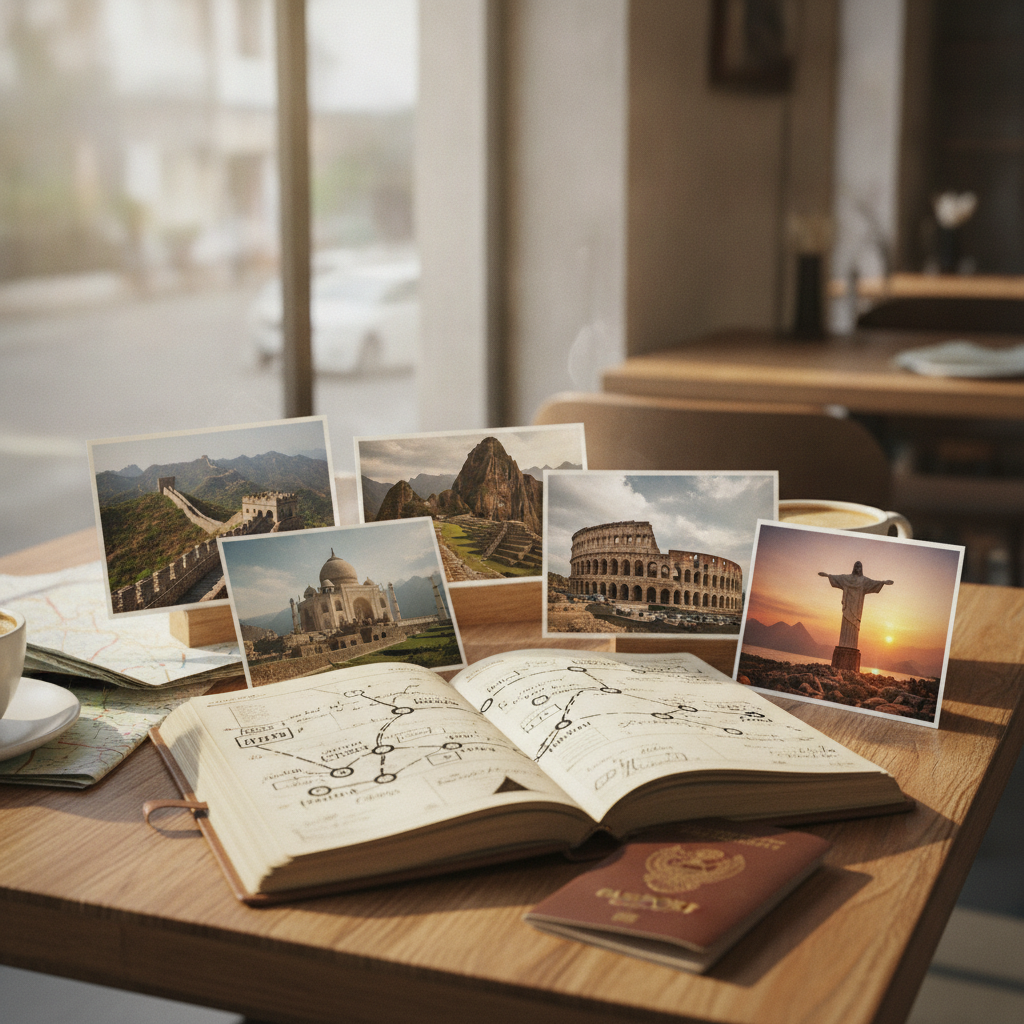
Have you ever wondered what it would actually take to visit the Seven Wonders of the World?
Not as a trivia list. Not as a poster on a classroom wall. As a real journey, with flights and ferry feelings, sunrise alarms, tired feet, border forms, weather decisions, and the strange little silence that happens when something you have seen in pictures is suddenly standing in front of you.
This is the bucket-list version of travel that sounds almost too big to touch. Seven places. Seven countries. Several continents. Temples, walls, cities, mountains, marble, stone, and one open-armed figure watching over a bay. It is ambitious, yes. But some dreams are allowed to be ambitious before they become practical.
So let us begin gently. Not with a spreadsheet. With a map, a little story, and the first question every good trip asks: what are we really hoping to feel when we get there?
First, which Seven Wonders?
The list most travelers mean today is the New Seven Wonders of the World, chosen in a global campaign announced in 2007. It includes the Great Wall of China, Petra, the Colosseum, Chichen Itza, Machu Picchu, the Taj Mahal, and Christ the Redeemer.
The Great Pyramid of Giza, the last surviving wonder of the ancient world, is often treated as an honorary wonder beside the list. If you are building a once-in-a-lifetime route, Egypt may quietly ask to be added. Bucket lists are rarely as obedient as headlines.
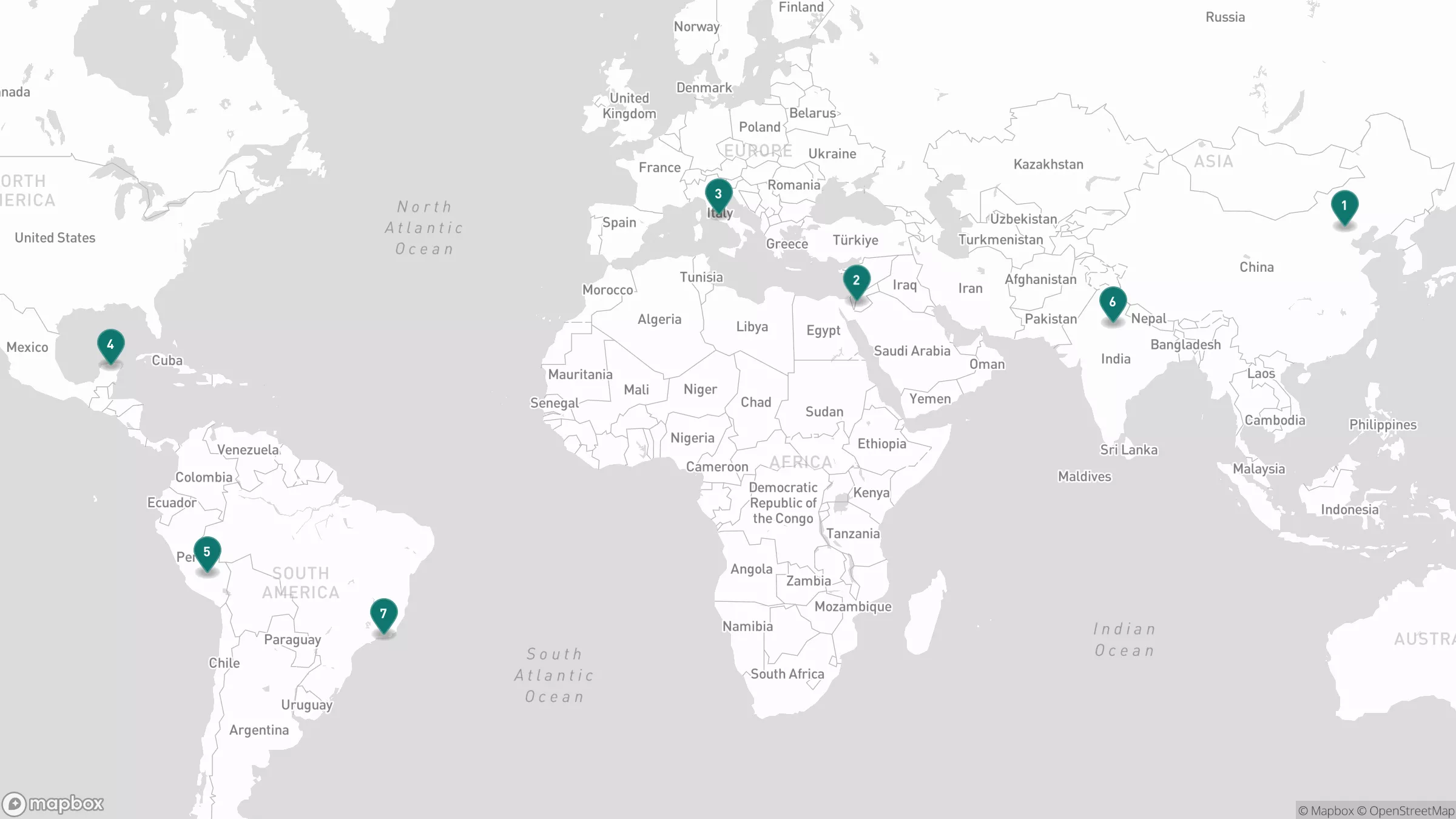
Map legend: 1 Great Wall of China, 2 Petra, 3 Colosseum, 4 Chichen Itza, 5 Machu Picchu, 6 Taj Mahal, 7 Christ the Redeemer.
The first practical truth is that this is not one trip for most people. It can be, if you have time, budget, stamina, and a fondness for airport carpets. But for many travelers, the Seven Wonders are better as a life chapter: one or two at a time, each folded into a richer journey through its country and region.
1. The Great Wall of China
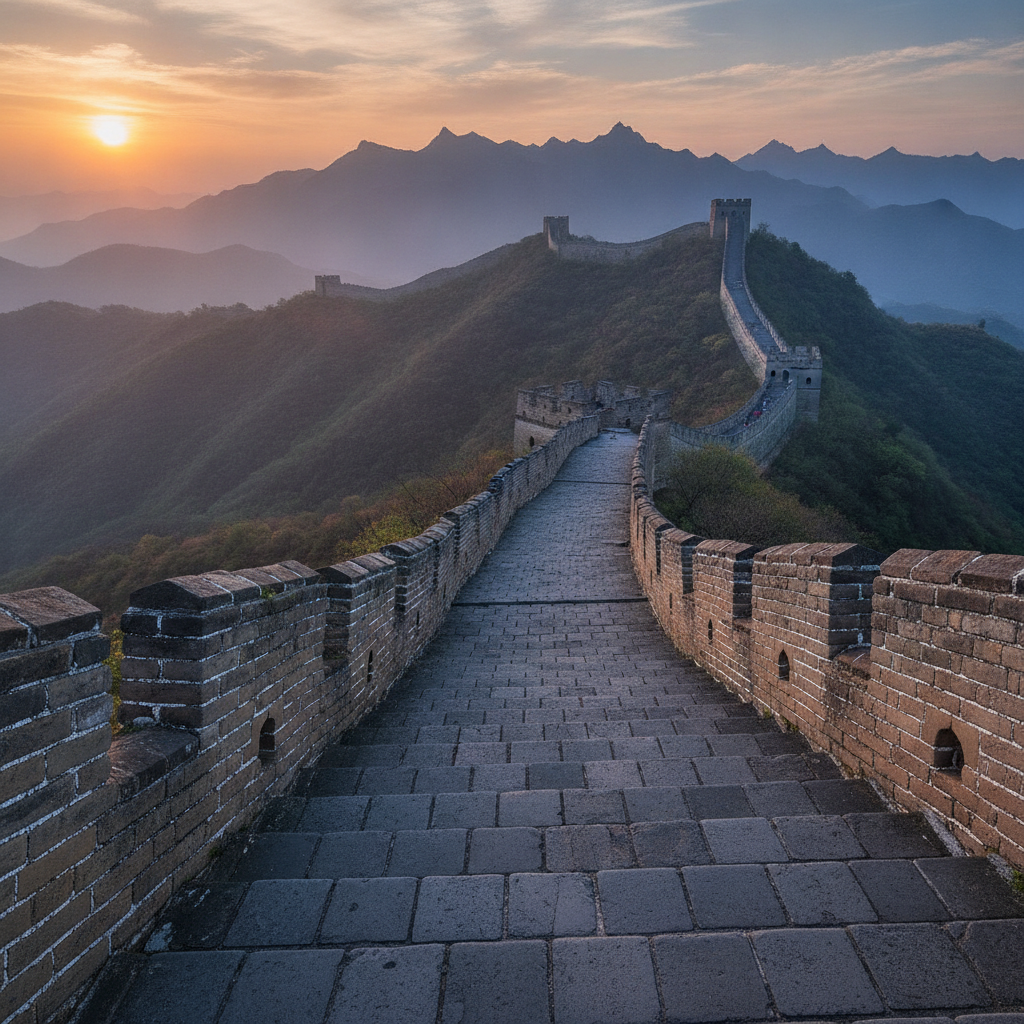
The Great Wall is not a single neat line across China. It is a vast family of walls, watchtowers, fortifications, repairs, ruins, and restored sections built across centuries. The travel fantasy is easy to understand: stone rising and falling over mountain ridges, watchtowers appearing through mist, the feeling that the horizon itself has been given stairs.
Most first-time visitors go from Beijing to a restored section such as Mutianyu or Badaling. Mutianyu is often the softer choice for travelers who want beauty, access, and a little more breathing room, though crowds still happen. The day can be simple: leave early, bring layers, wear shoes with grip, and let the wall be more than a photo stop. Walk slowly enough to notice how the stones change under your feet.
The romance of the Great Wall is distance. It makes you feel the size of a country, the patience of labor, and the absurdity of trying to contain history with stone. If you go with children, let them count watchtowers. If you go with someone you love, pause before turning back and look at how far the wall keeps going without you.
Maya's travel note: build the visit around the section, not just the name. Weather, knees, crowds, and transport matter here. This is exactly the kind of day where a travel buddy can keep the route practical while you keep your attention on the ridge.
2. Petra, Jordan
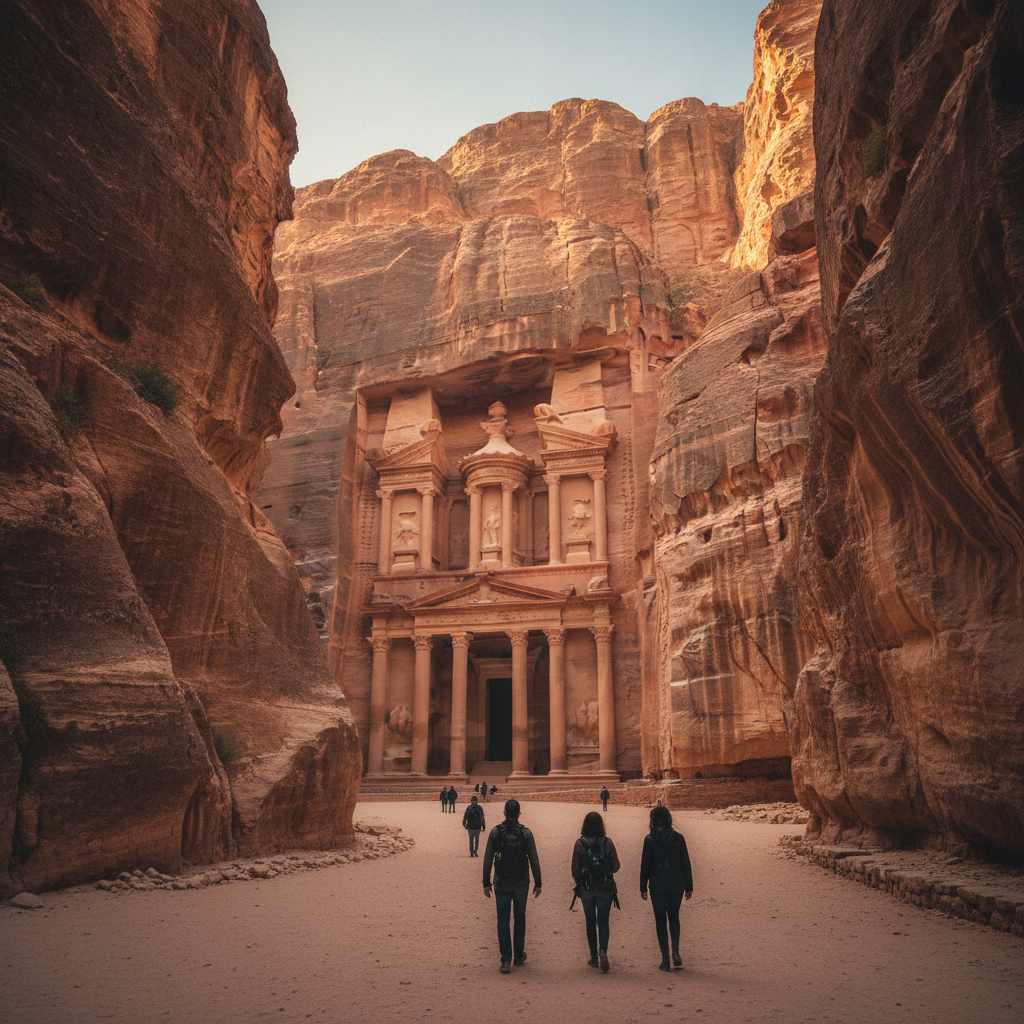
Petra does not reveal itself all at once. That is part of the spell. You walk through the Siq, a narrow sandstone passage whose walls rise like a secret being slowly told. The light shifts from gold to rose to amber. Then the Treasury appears ahead, carved into the cliff face, not so much seen as discovered.
The Nabataean city was a trading hub, an engineering achievement, and a desert masterpiece. The famous Treasury is only the beginning. Petra asks for time: the Royal Tombs, the Monastery hike if your body agrees, the small turns where stone suddenly becomes architecture, and the quiet reminders that people lived, traded, prayed, and adapted here long before it became a wonder on a list.
The practical version begins in Wadi Musa, starts early, and respects heat. Bring more water than seems romantic. Wear real shoes. Decide before you go how much walking you want, because Petra can expand to fill every hour you give it.
Maya's travel note: Petra is a place for pacing. Do not spend all your awe at the Treasury. Save some for the quieter paths, the color of the rock in late light, and the moment you realize the city is larger than the postcard.
3. The Colosseum, Italy
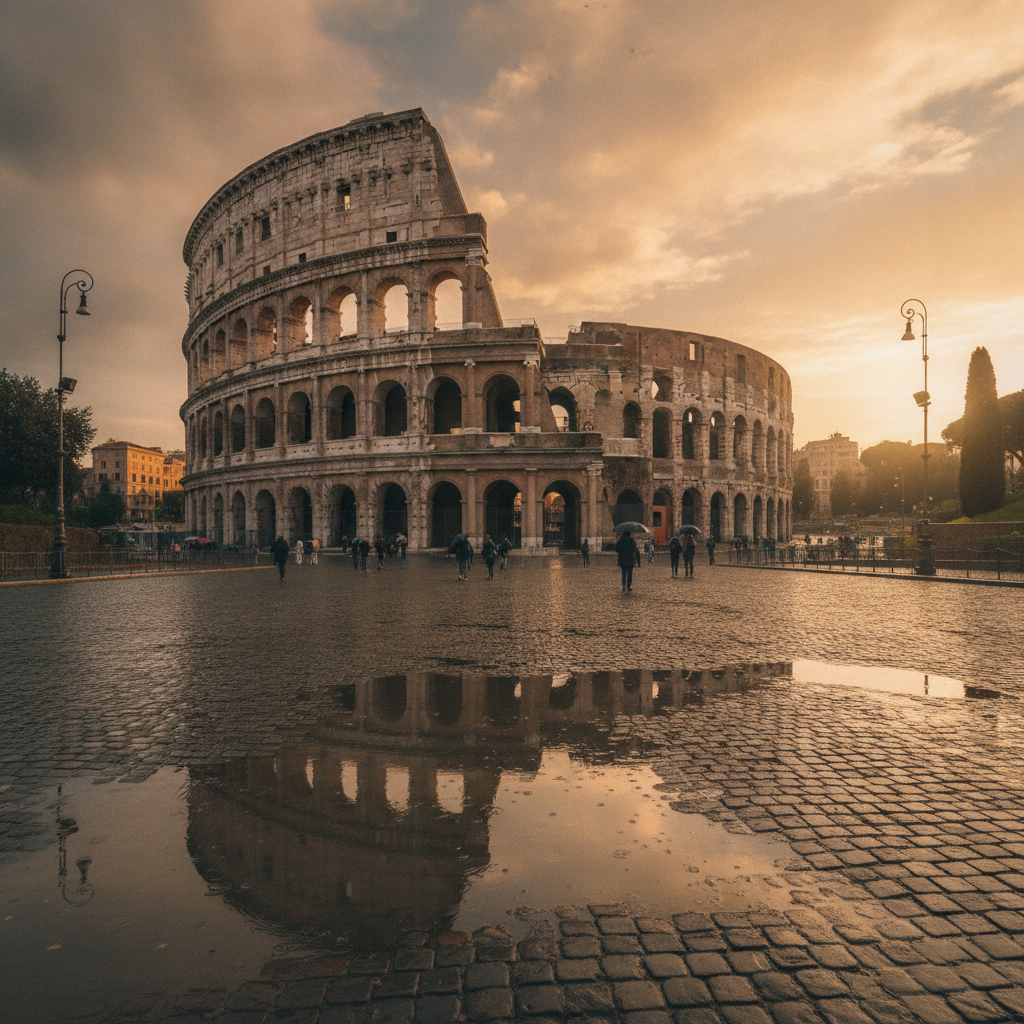
The Colosseum is almost impossible to meet fresh. You have seen it on postcards, in films, on pasta-sauce labels, in history books, and in every Rome guide ever written. Then you stand beside it and remember that familiarity is not the same as presence.
In Rome, the Colosseum is not sealed away from daily life. Traffic moves nearby. Tour groups gather. Someone is late for lunch. The ancient arena sits in the middle of the modern city like a stone lung, breathing centuries in and out.
A good visit pairs the Colosseum with the Roman Forum and Palatine Hill, because the arena makes more sense when the political and civic world around it comes into view. Go early or late if you can. Book timed entry. Give yourself room afterward to wander without an agenda, because Rome's best transitions often happen by accident: a side street, a fountain, a small espresso taken standing up.
The story here is not only spectacle. It is power, performance, engineering, cruelty, survival, and the way cities keep living around their ruins. The Colosseum reminds you that wonder can be uncomfortable. It can ask you to admire craft while thinking carefully about what people built it for.
Maya's travel note: do not make this a one-monument day. Let Rome soften the edges afterward with food, walking, and ordinary beauty. Ancient stone lands differently when followed by a bowl of pasta and a slow evening street.
4. Chichen Itza, Mexico
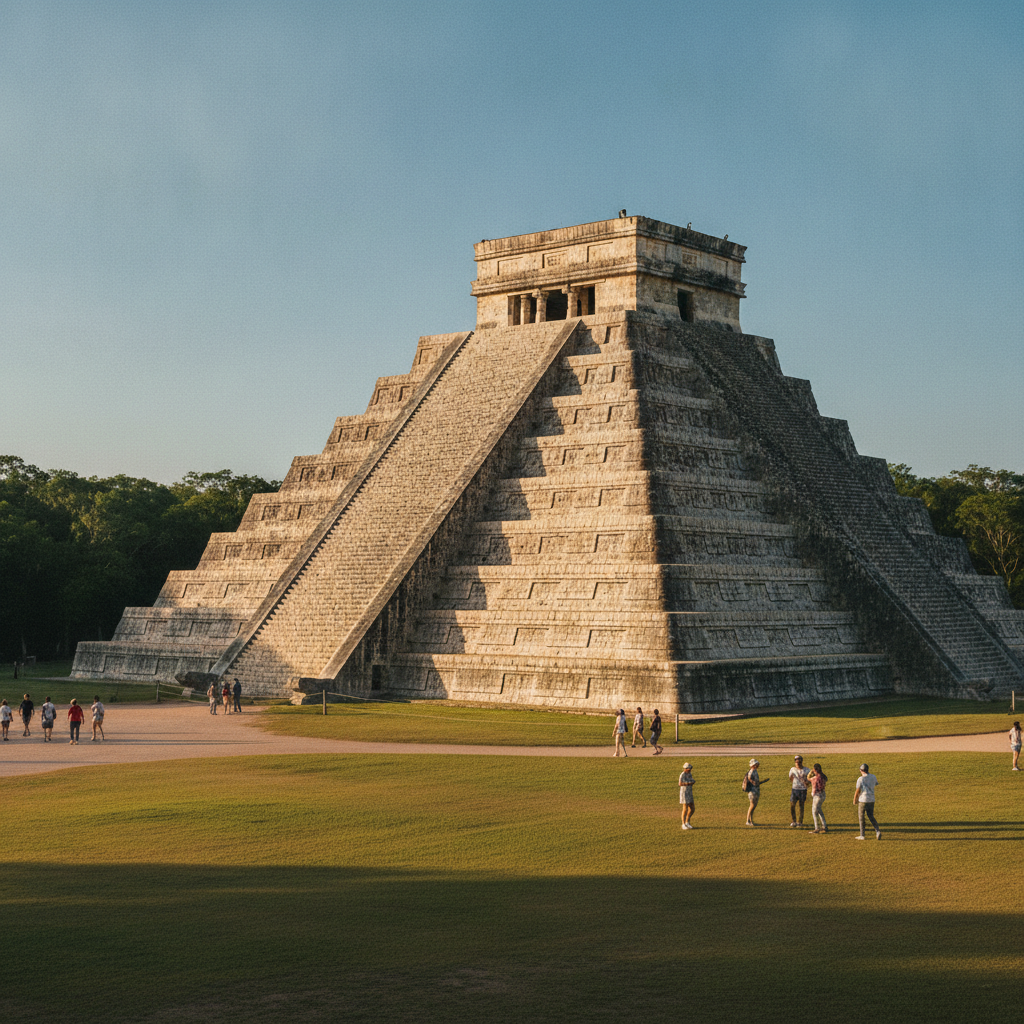
Chichen Itza is often introduced through El Castillo, the stepped pyramid that rises with almost mathematical confidence from the Yucatan light. It is clean, commanding, and instantly recognizable. But the site is not only a pyramid. It is a city of astronomy, ceremony, sport, politics, trade, and layered Maya and Toltec influence.
Many travelers visit from Cancun, Playa del Carmen, Tulum, Merida, or Valladolid. The smartest version starts early, before the heat and crowds thicken. Bring sun protection, water, and curiosity. A guide can help the site become more than shapes: the ball court acoustics, the calendar associations, the carvings, the sacred cenote, the way knowledge was built into stone.
Chichen Itza is one of those places where the open sky matters. There is drama in the geometry, but also in the exposure. You feel the sun. You feel the plaza. You feel how public and ceremonial the city must have been.
Maya's travel note: pair the visit with Valladolid or a cenote if time allows, but do not treat the wonder as a quick stop between resort days. Give it a morning that belongs to it.
5. Machu Picchu, Peru
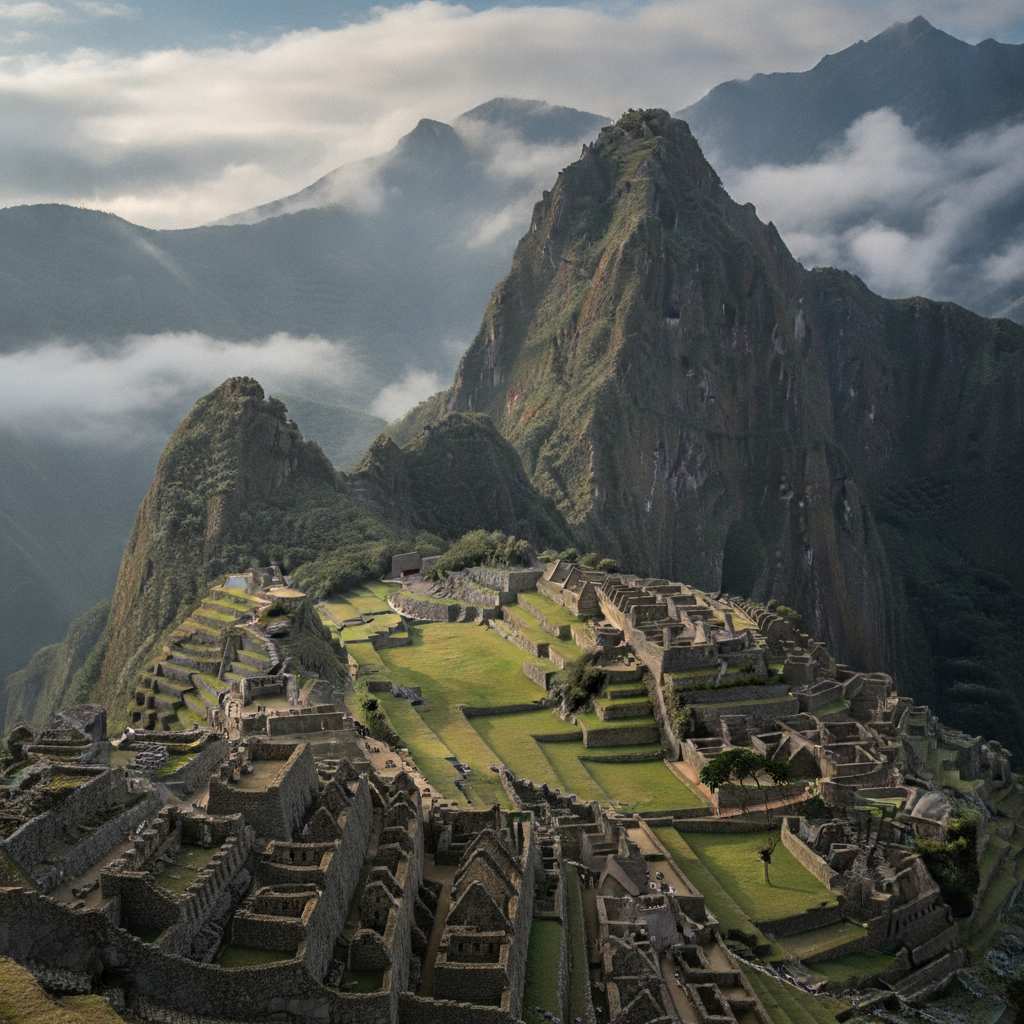
Machu Picchu has a way of making people whisper. Maybe it is the altitude, or the green cliffs, or the terraces stepping so precisely into the mountain. Maybe it is the feeling that the city is both hidden and completely awake.
Most travelers pass through Cusco and the Sacred Valley before reaching Aguas Calientes, then continue by bus or foot to the site. Some arrive after hiking the Inca Trail or another trek. However you get there, the planning matters: timed entry, circuits, train tickets, altitude adjustment, weather, and rules that can change. This is not a place to freestyle at the last minute.
But once you are inside, let the logistics fall away. Look at the stonework. Look at how the buildings sit with the mountain rather than against it. Watch clouds move across Huayna Picchu. Notice how green can feel almost architectural.
The story of Machu Picchu is often told as mystery, but it is also a story of skill, landscape intelligence, empire, agriculture, astronomy, and survival. It asks you to be humble about what a city can be.
Maya's travel note: give yourself acclimatization time in Cusco or the Sacred Valley. Wonder is harder to feel when your head hurts. A better pace is not indulgence here; it is part of the trip design.
6. The Taj Mahal, India
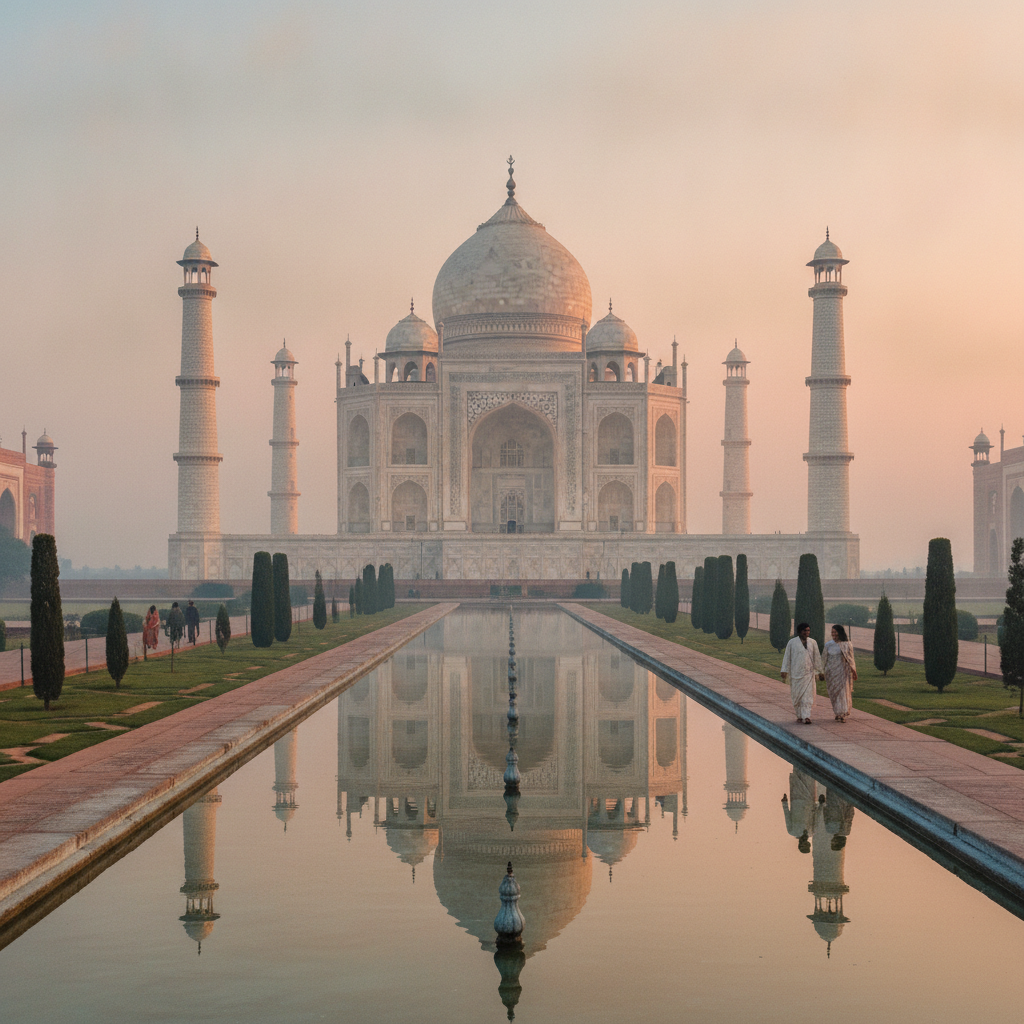
The Taj Mahal is the wonder most likely to be described as a love story, and that is true enough to begin with. Built by Mughal emperor Shah Jahan as a mausoleum for Mumtaz Mahal, it is marble, symmetry, grief, devotion, craft, and empire gathered into one luminous form.
But the Taj is also a place of timing. Dawn changes it. Mist changes it. Crowds change it. The marble seems to hold light differently as the day moves. If you can, arrive early, move slowly, and resist the urge to experience it only through the phone screen.
Most travelers visit from Agra, often as part of a route that includes Delhi and Jaipur. The practical details are simple but important: check closure days and ticket rules, dress comfortably and respectfully, plan around heat, and decide whether you want a guide for history and context.
The Taj Mahal is not subtle, yet the best moments there can be. A reflection in the pool. A carved detail. A quiet angle from the gardens. The realization that millions of people have come looking for the same thing and still somehow find their own version of it.
Maya's travel note: do not rush Agra as only a monument stop. Even one thoughtful overnight can turn the Taj from a checklist item into a morning you remember in layers.
7. Christ the Redeemer, Brazil
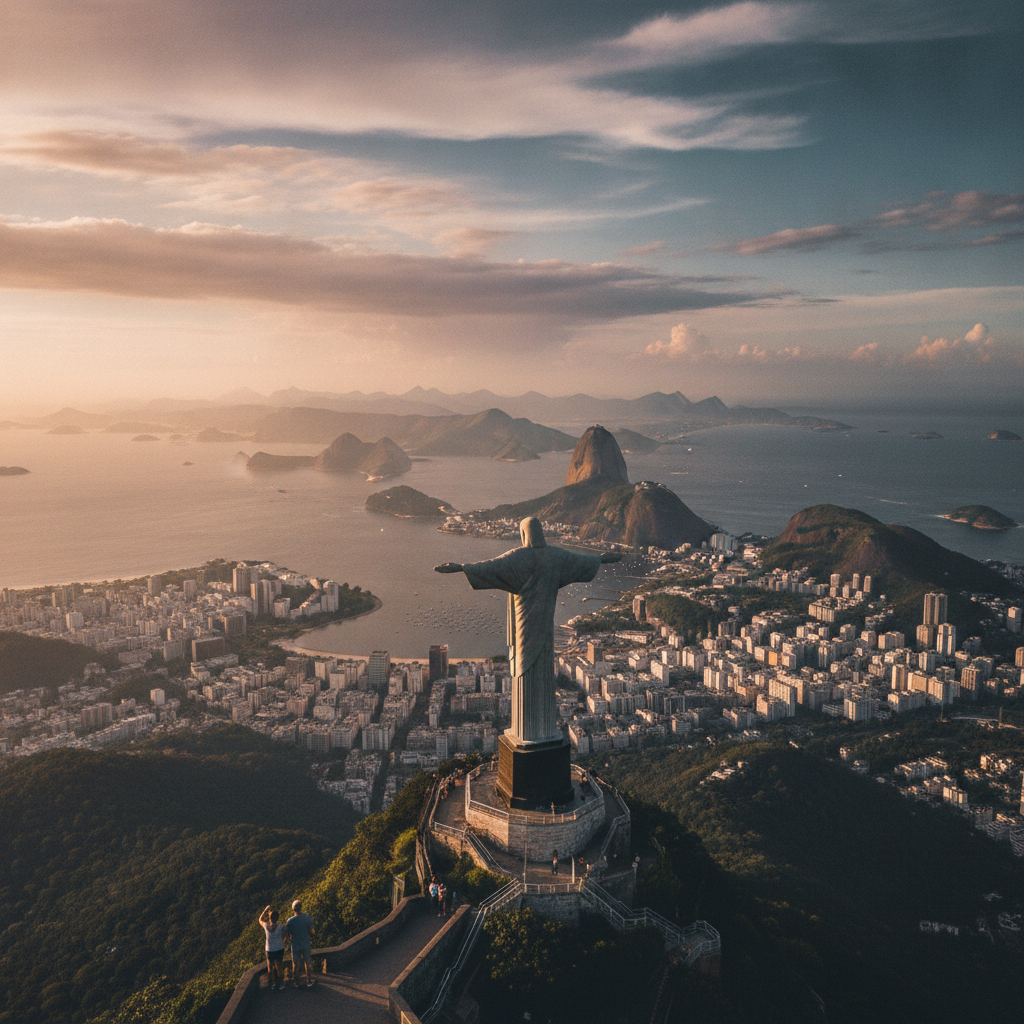
Christ the Redeemer is a wonder of position as much as sculpture. The statue stands on Corcovado Mountain above Rio de Janeiro, arms open over beaches, city, forest, bay, and cloud. The view is part of the monument. The city is part of the monument. Weather is very much part of the monument.
Go on a clear day if you can, but be patient with Rio's clouds. They can close like curtains and open again in minutes. The train through Tijuca Forest is part of the romance, carrying you upward through green before the city suddenly spreads below.
The statue itself is younger than the others on this list, completed in the 20th century, but its emotional force is immediate. It is not ancient stone or lost city. It is a gesture: open arms, high place, wide view, a city held in a single silhouette.
Build a Rio visit around more than the summit. Sugarloaf, the beaches, music, food, neighborhoods, and the rhythm of the city give the statue its setting. Without Rio below it, Christ the Redeemer would be impressive. With Rio below it, it becomes unforgettable.
Maya's travel note: check visibility before you commit to the ascent. A flexible travel day matters here. Let the mountain tell you when it is ready.
Could you visit all seven?
Yes. But the better question is how you want to meet them.
You could design one sweeping around-the-world route: China to Jordan to Italy to Mexico to Peru to India to Brazil, or a more efficient version shaped by flights, seasons, and visa needs. You could also make it a many-year promise: one wonder per year, each attached to a fuller trip instead of a sprint.
The dream itinerary has a few practical truths:
- Seasons matter. Heat, rain, clouds, snow, and crowd patterns can change the experience dramatically.
- Entry rules matter. Timed tickets, guides, circuits, permits, closures, and local regulations are part of the real trip.
- Recovery matters. These are not just photo stops; many involve walking, stairs, altitude, sun, or long transfer days.
- Context matters. A wonder is richer when you understand the people, landscape, and living culture around it.
- Pace matters most of all. The whole point is not to collect seven proofs that you went. It is to come home with seven memories that still breathe.
If your bucket list begins here, begin softly. Choose the wonder that already calls to you. The one your child asked about. The one you saw in a book. The one that makes you open a map when you should be doing something else.
And when you are ready to turn the wondering into a route, your travel buddy can help with the beautiful practicalities: which season, which airport, which hotel base, how many nights, what to book early, when to rest, and where to leave space for the moment you did not know you came for.
The world is large. The list is famous. But the trip, when it finally happens, will be yours.
Continue wandering
One more story for the road
October 8, 2026 · Maya Roam
Bologna Has 62 Kilometres of Roof
Bologna has roughly 62 kilometres of covered portico, about 38 of them inside the historic centre, and the result is a city you can cross — and climb 200 metres of hill in — without ever stepping into the weather. The s…
Read nextInspired to go?