
Travel story 13 min read
MyTravelBuddy Stories
Bora Bora Is a Honeymoon Written in Water
A romantic, practical journey into Bora Bora: its lagoon, history, people, overwater bungalows, reef sharks and rays, and what a one-week honeymoon from Los Angeles may really cost.
Bora Bora Is a Honeymoon Written in Water
Bora Bora does not look real at first.
It looks arranged by longing: a ring of reef holding the Pacific back, a lagoon shifting from pale glass to impossible blue, and Mount Otemanu rising in the middle like a dark green vow. Then the plane descends toward a small motu, the water comes closer, and the fantasy becomes more difficult to dismiss.
This is why Bora Bora has become the honeymoon people whisper about before they even know how to pronounce the airport codes.
Not because it is the only beautiful island in the world. Not because romance requires a five-star resort or a room suspended above the sea. Bora Bora matters because it understands the theater of arrival. You do not simply land and check in. You cross water. You watch the main island slide past. You step from a boat onto a wooden dock, and somewhere in that first hour the ordinary world begins to loosen its grip.
For a honeymoon, that is powerful.
The best trips after a wedding are not only vacations. They are transitions. Two people who have just stood in front of everyone they love are suddenly alone together, carrying new rings, leftover exhaustion, and the strange quiet that follows a big public joy. Bora Bora knows what to do with quiet. It gives it a lagoon.
The Island in the Middle of the Blue
Bora Bora is part of the Leeward Islands, in the Society Islands of French Polynesia, northwest of Tahiti in the South Pacific. Most travelers from Los Angeles fly first to Papeete, Tahiti, then continue on a short domestic flight to Bora Bora. From there, the airport shuttle brings visitors across the lagoon toward Vaitape, the island's main village, while many luxury resorts collect guests by private boat and carry them directly to their motu.
That geography is the secret.
Bora Bora is not just an island with beaches. It is a volcanic island inside a lagoon, protected by a barrier reef, scattered with small islets called motu. Mount Otemanu, the island's iconic extinct volcanic peak, gives the whole place its silhouette. The lagoon gives it its color. The reef gives it its calm.
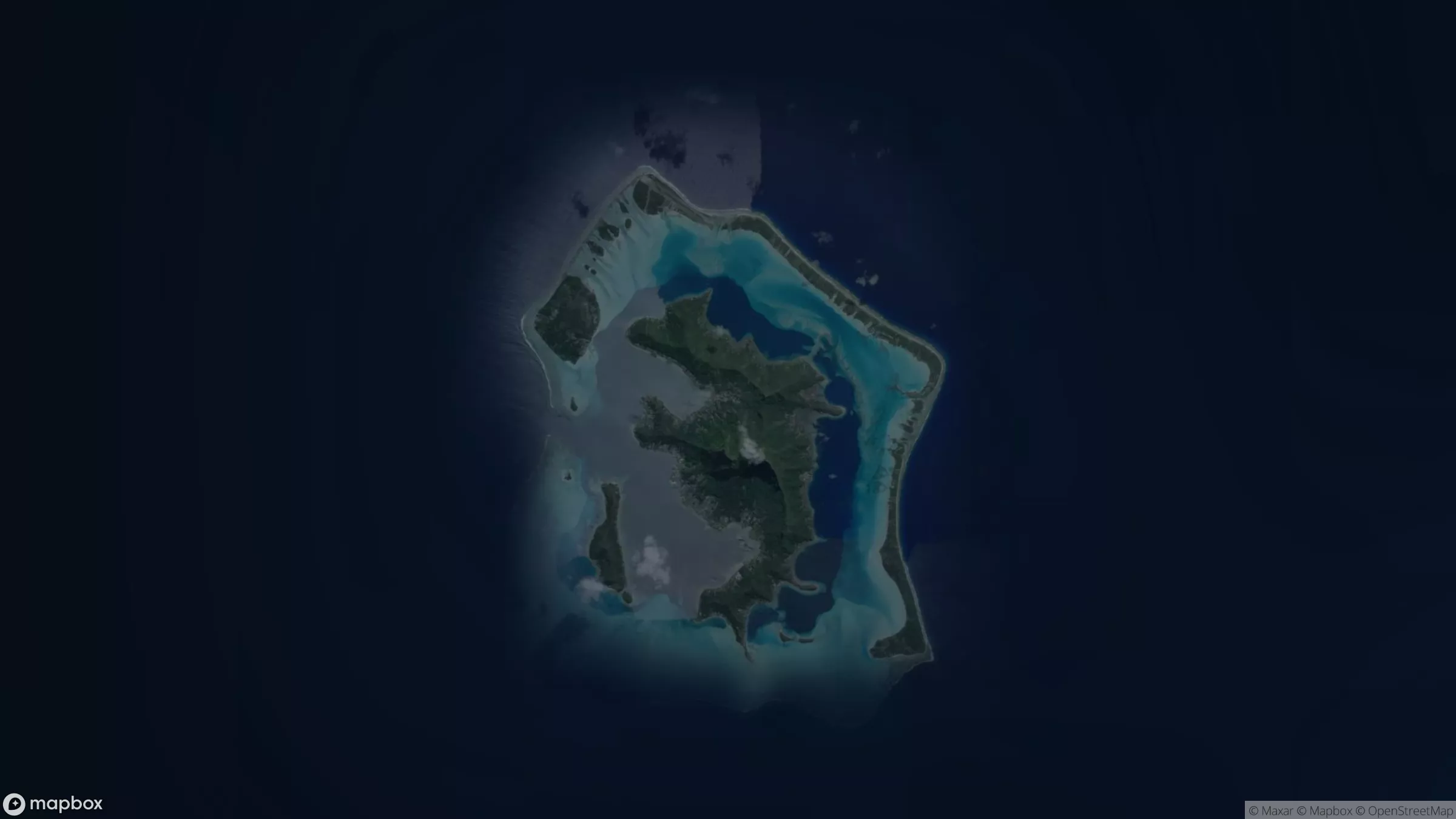
From above, Bora Bora is easier to understand: volcanic island, calm lagoon, reef ring, motu, and open Pacific beyond.
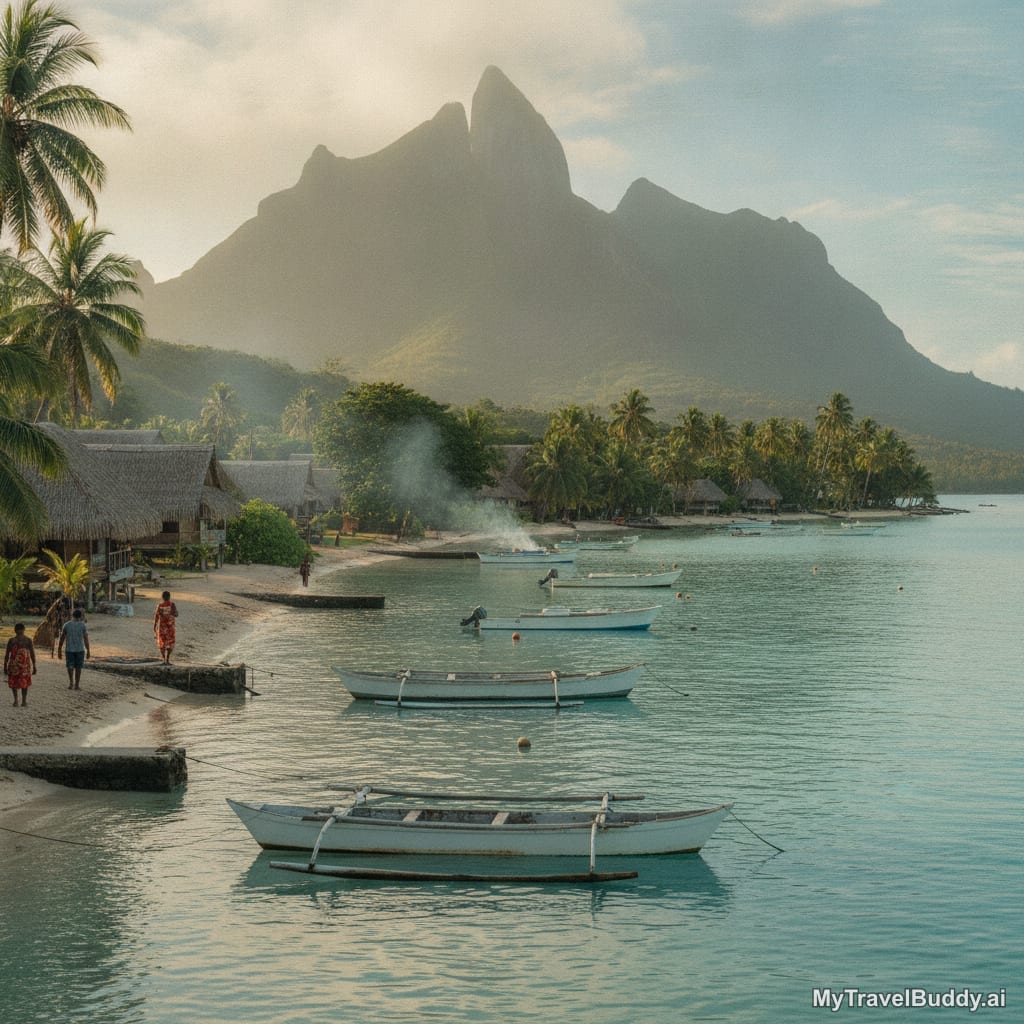
Look at a map and Bora Bora seems tiny. Arrive by boat and it feels ceremonial. The sea is everywhere, but rarely in a frightening way. Inside the lagoon, water becomes room: a place for paddleboards, snorkeling boats, quiet swims, breakfast delivered by canoe, and long afternoons when the only real plan is to watch the light change.
The island's beauty is famous because it is so legible. Even a tired traveler understands it immediately. Mountain. Lagoon. Reef. Motu. Bungalow. Sky.
But there is history beneath the postcard.
Polynesian voyagers reached these islands long before Bora Bora became an international shorthand for romance. The island's Tahitian name is often connected to Pora Pora, a sound and meaning older than the Western spelling that eventually became Bora Bora. The island later appeared in European navigation records, became a kingdom, and was annexed by France in the late 19th century.
Then, during World War II, Bora Bora became part of a very different story. After the attack on Pearl Harbor, the United States established a supply base here under the code name Operation Bobcat. Thousands of American personnel arrived in 1942, building roads, a quay, fuel facilities, defenses, and an airstrip on Motu Mute. The anticipated attack never came, but the traces remain: cannons on ridges, old military sites, and an airport whose origins belong to wartime logistics rather than honeymoon brochures.
That contrast makes the island more interesting. Bora Bora is not only softness. It has held voyagers, royalty, missionaries, colonial change, war infrastructure, and now the complicated economy of global luxury travel. The lagoon looks timeless, but the island has been changed by every age that reached it.
Who Lives Behind the Dream
About ten thousand people live in the Bora Bora commune, with Vaitape as the main settlement. The island community is Polynesian, French Polynesian, and deeply shaped by the rhythms of tourism, family, church, schools, boats, markets, fishing, guesthouses, resort work, and ordinary errands that continue whether honeymooners are watching the sunset or not.
French and Tahitian are part of daily life. English is widely used in visitor settings because tourism is central to the economy. But it helps to remember, gently and clearly, that Bora Bora is not an empty paradise waiting for travelers to feel something.
It is home.
That matters when you move through it. The right kind of honeymoon here is not a performance of luxury that forgets everyone else. It is grateful, slow, and respectful. It buys from local shops when it can. It learns a few words. It treats cultural shows, pearl jewelry, poisson cru, pareos, flower crowns, church bells, fishing boats, and roadside fruit stands as parts of a living place, not accessories to a private fantasy.
There is no romance in treating a destination as scenery only.
Bora Bora becomes more beautiful when you notice that people live inside the dream.
The Overwater Room That Changed Honeymoons
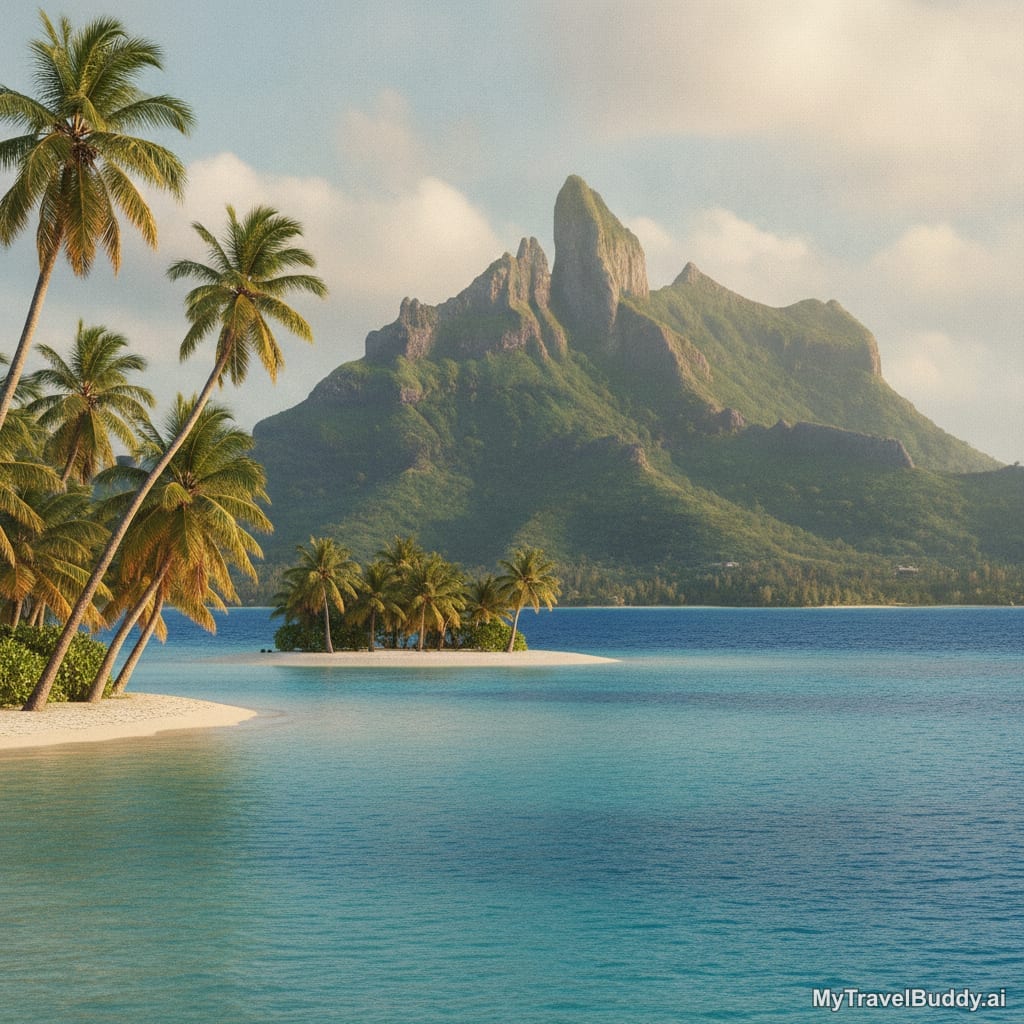
The overwater bungalow is Bora Bora's most recognizable promise.
Strictly speaking, the first overwater bungalows in The Islands of Tahiti began on Raiatea in the 1960s, but Bora Bora made the idea feel mythic. A thatched roof above turquoise water. A glass floor panel where fish pass beneath your feet. A private deck with ladder steps into the lagoon. Morning light on Mount Otemanu. Night sounds from the reef.
This is why honeymooners come.
The room is not just a place to sleep. It changes the pace of the day. You do not have to go somewhere to find the water. The water is already below you. You do not have to dress for breakfast if you do not want to. Breakfast can arrive by canoe, flowers at the bow, coffee and fruit and pastries floating toward your deck like the gentlest possible argument for staying in.
The names are part of the fantasy now: Four Seasons Resort Bora Bora, The St. Regis Bora Bora Resort, Conrad Bora Bora Nui, InterContinental Bora Bora Resort & Thalasso Spa, Le Bora Bora by Pearl Resorts, The Westin Bora Bora Resort & Spa. Each has its own mood, view, level of seclusion, dining style, transfer logistics, and price. Some sit on motu facing the mountain. Some lean into spa culture. Some are grand and polished. Some feel more Polynesian in design and texture.
The best choice depends on the honeymoon you actually want.
If you want the classic cinematic version, choose an overwater villa with a Mount Otemanu view. If you want privacy, ask about the spacing between bungalows and boat traffic. If you want to swim easily, check ladder access, currents, depth, and whether the resort lagoon is especially calm. If food matters, study dining options and half-board plans before you fall in love with the photos. If you want more contact with local life, consider splitting the stay between a luxury resort and a guesthouse or main-island accommodation.
That last option is not less romantic.
Sometimes the most romantic itinerary is the one that gives the dream a human edge.
What You Do There, Once You Stop Staring
The honest answer is: you stare for a while.
Bora Bora's first activity is surrendering to the view. Let it happen. Sit on the deck. Swim before breakfast. Watch clouds move around Otemanu. Learn the names of blue again. The island is expensive enough that no one should feel guilty for enjoying the room they paid for.
But the lagoon asks you to enter it.
Take a lagoon tour early in the trip, before the days become too soft. A good boat outing can bring you to coral gardens, quiet motu, shallow sandbars, ray encounters, and places where blacktip reef sharks move through clear water with the calm authority of animals that belong there. Many tours include a Polynesian-style lunch on a motu, the kind of meal where grilled fish, coconut, fruit, and salt air make the table feel less like a restaurant and more like a pause in the day.
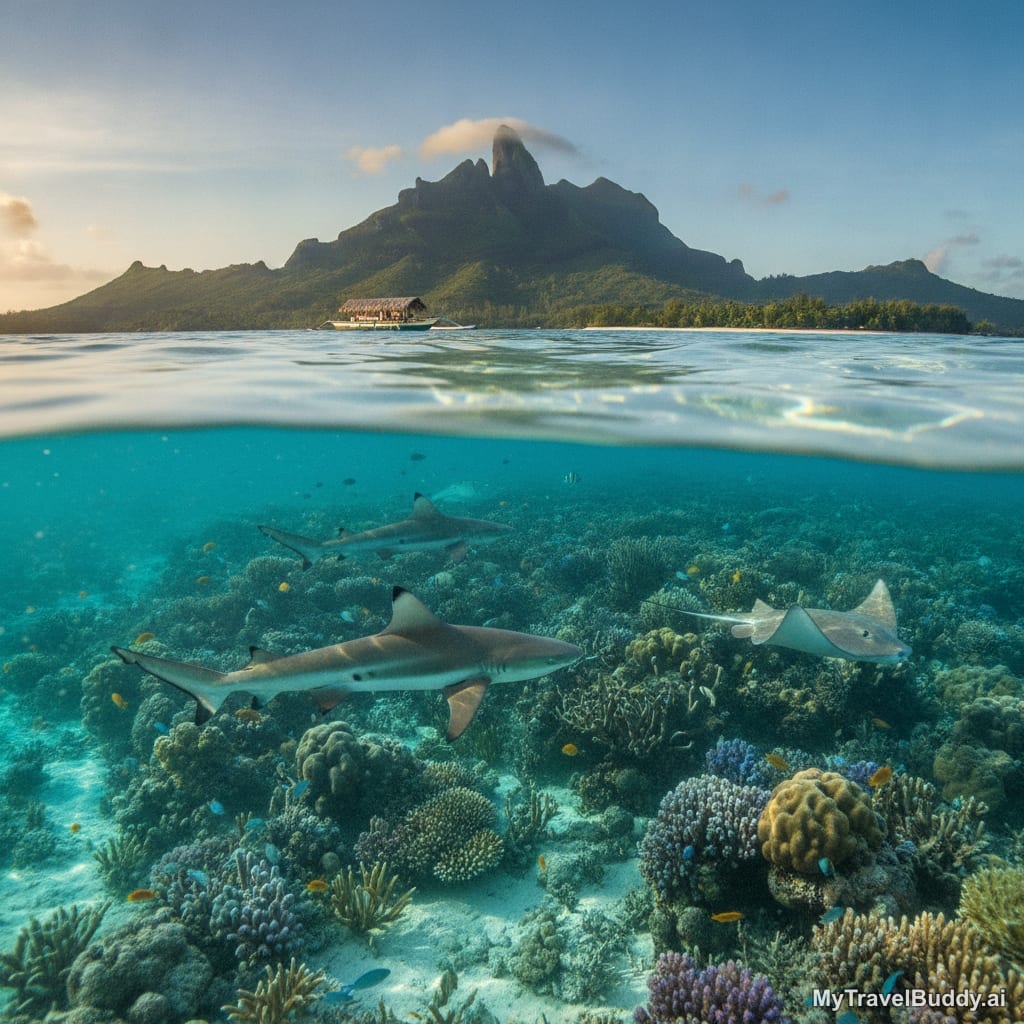
Swimming with reef sharks and stingrays is one of Bora Bora's signature experiences. The blacktip reef sharks commonly seen on tours are generally shy, and the rays often glide close in the shallow water. Still, this is wildlife, not a petting zoo. Choose operators who brief guests carefully, respect the animals, and avoid turning the encounter into chaos. Keep hands gentle, follow guide instructions, and remember that wonder is better than domination.
Snorkeling is the obvious pleasure, but diving adds another layer: manta rays, coral, tropical fish, deeper blue, and the humbling sensation of being a visitor in a world that was busy before you arrived. Non-divers can still have full days here with glass-bottom boats, paddleboards, kayaks, sunset cruises, spa treatments, beach time at Matira Beach, bike rides, 4x4 inland tours, shopping for local crafts and pearls in Vaitape, and history walks to WWII remnants.
Matira Beach deserves its fame because it is public, soft, and generous. Many of Bora Bora's most luxurious edges are attached to resorts, but Matira remains a place where the island opens more simply: shallow water, white sand, sunset color, and no need to improve the moment.
On land, Mount Otemanu and Mount Pahia shape every view. The full summit is not a casual hike, but guided inland excursions and viewpoints can bring you into the island's green interior, toward old cannons, banyan shade, fruit trees, and panoramas that remind you the lagoon is only half the story.
The nature here is not subtle. It is lush volcanic rock, palms bending into trade winds, coral gardens, reef channels, water so clear it makes shadows look deliberate, and sea life constantly slipping in and out of visibility. Even from a bungalow deck, the lagoon is not empty decoration. Fish pass below. Rays appear like moving silk. Farther out, reef and open ocean negotiate with each other all day.
That is the real luxury: not the minibar, not the thread count, not the arrival drink.
The real luxury is being close enough to water that your nervous system starts speaking more slowly.
How a Week Might Feel
Seven nights in Bora Bora can be enough if you let the trip breathe.
The first day is arrival. Do very little. Swim if you have the energy. Eat early. Sleep to the sound of water.
The second day belongs to the bungalow and the lagoon immediately around you. Breakfast on the deck, a long swim, a spa treatment, maybe a sunset cruise if you can stay awake.
The third day is for a lagoon tour: coral gardens, sharks, rays, motu lunch, and that dazzling middle-of-the-lagoon feeling where the island looks like something floating in its own reflection.
The fourth day can move inland: Vaitape, a 4x4 tour, WWII sites, viewpoints, local shops, and a dinner that reminds you there is life beyond resort paths.
The fifth day is for Matira Beach, snorkeling, paddleboarding, or nothing at all. Honeymoons need unclaimed time.
The sixth day can be the splurge inside the splurge: a private boat, a special dinner, a couples massage, a helicopter flight, or simply an afternoon where phones stay inside and the two of you remember why you came.
The seventh day is the goodbye day, and Bora Bora is very good at making goodbyes difficult.
A travel buddy is useful here not because Bora Bora is hard to understand, but because the logistics are expensive enough to deserve care: flight timing through Tahiti, boat transfers, meal plans, activity spacing, weather tolerance, reef-safe packing, and the question every honeymoon should ask before it becomes an itinerary: how much do we want to do, and how much do we want to remember?
What It Costs From Los Angeles
Bora Bora is not a casual bargain trip from LA. It is a dream with receipts.
For a one-week honeymoon for two leaving from Los Angeles, a realistic planning range is roughly:
- More modest Bora Bora week: about $6,000 to $9,000 total for two if you use simpler main-island lodging or a guesthouse, watch airfare carefully, limit expensive excursions, and do not spend all seven nights overwater.
- Classic luxury honeymoon: about $12,000 to $20,000 total for two with round-trip flights from LAX to Tahiti, domestic flights to Bora Bora, boat transfers, several nights in an overwater bungalow, meals, a lagoon tour, and a few romantic extras.
- No-apologies overwater splurge: $25,000+ total for two if you choose top resort categories, premium views, private transfers, fine dining, spa days, helicopter flights, or a full week in a high-end overwater villa.
The big variables are season, airfare, resort category, view, meal plan, and how many nights are truly overwater. Economy flights from Los Angeles to Tahiti often land somewhere around $900 to $1,600 per person round-trip when prices are reasonable, but they can move. The domestic Tahiti-to-Bora-Bora flight adds several hundred dollars per person. Overwater bungalows commonly start around $800 to $1,200 per night and can climb far beyond $3,000 per night at the most exclusive resorts and villa categories.
Meals matter too. Bora Bora dining can be expensive, especially at resort restaurants. Transfers can matter. Activities can matter. A private lagoon tour or special dinner may be worth it, but it should be chosen deliberately, not because the honeymoon machine whispered that every moment must be upgraded.
The gentle strategy is to decide what part of the dream matters most.
If it is the overwater room, spend there and simplify elsewhere. If it is the marine life, choose a strong lagoon tour and maybe a dive. If it is privacy, pay attention to resort layout. If it is culture and island texture, spend time on the main island instead of staying sealed inside the resort.
Luxury feels better when it matches you.
Why People Keep Choosing Bora Bora
People go to Bora Bora for the lagoon first.
They go for the overwater bungalows, for honeymoon photographs, for anniversaries, for proposals, for once-in-a-lifetime celebrations, for the idea of waking above clear water with nowhere urgent to be. They go because the island has become a symbol of romance so strong that even skeptical travelers become a little softer when they see the reef from the plane.
But they return, or dream of returning, for smaller reasons.
The hush before sunrise. The first fish under the glass floor. The way a ray moves like a secret. The mountain changing color. The kindness of someone steering a boat across water they know by heart. The taste of lime and coconut in poisson cru. The absurd happiness of stepping from bed into the lagoon. The fact that, for a few days, love can be given a landscape large enough to hold it.
Bora Bora is not perfect. No destination is. It is expensive, remote, heavily shaped by tourism, and vulnerable like all reef and island environments are vulnerable. To love it well is to be honest about that.
Still, there are places that earn their myth.
Bora Bora earns it every morning, when the light returns to the water and the bungalows appear to float between the mountain and the sky. It earns it when two people stand on a deck in the first quiet days of married life and realize the world has briefly become very simple.
Blue below.
Green ahead.
One hand finding another.
And nothing, for once, that needs to happen faster.
Continue wandering
One more story for the road
October 9, 2026 · Maya Roam
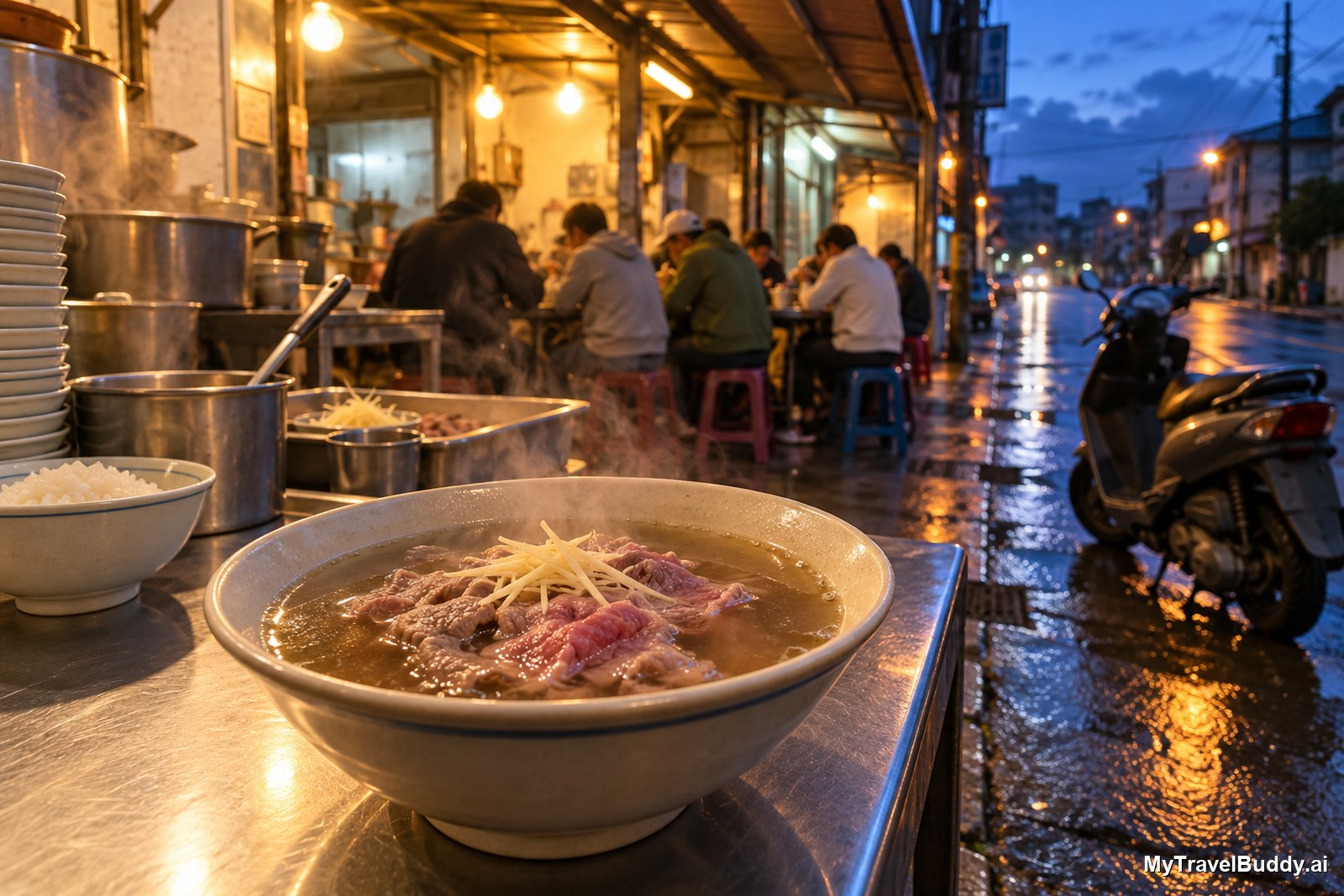
Tainan's Famous Beef Soup Is Open 24 Hours a Week
Tainan's most celebrated beef soup is served 5am to 11am, Thursday to Sunday - twenty-four hours a week. The clock isn't a gimmick, it's the dish. A dawn walking loop, the closure days nobody warns you about, and what October really feels like.
Read nextInspired to go?